

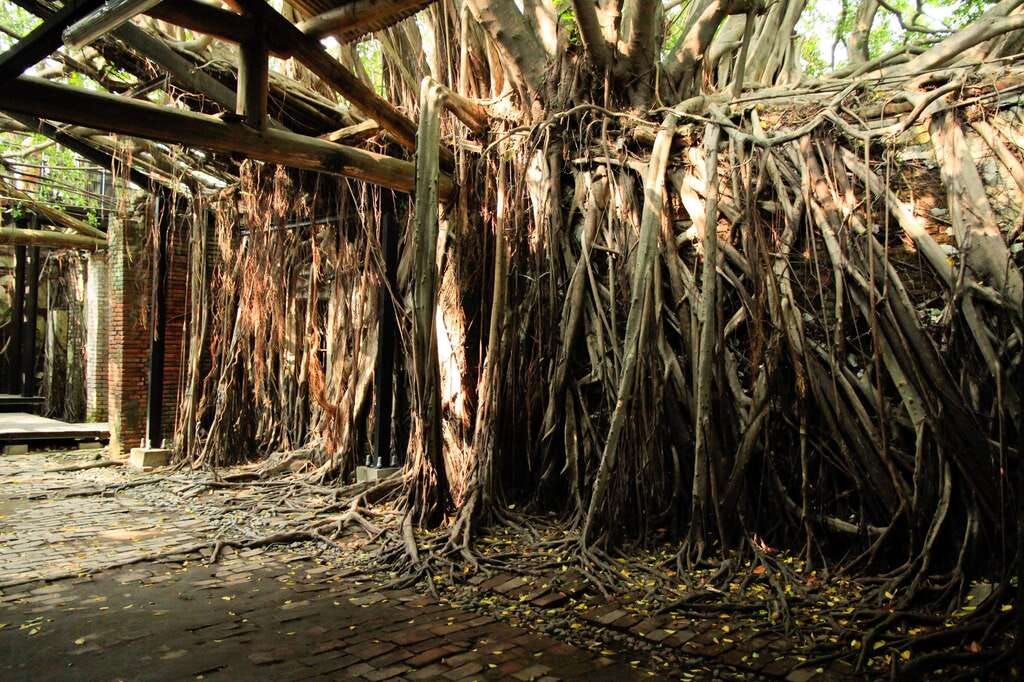
one of my favorite occurrences in life is when “nature” takes things back. when places where humans asserted their affinity for dominance by way of inorganic objects become reassumed by the earth. abandoned buildings, cars, pianos and road signs become entirely overgrown by the surrounding flora. i find it to be poetically just.
one of the most exquisite examples i have seen of this is the “Anping Treehouse”, located outside Tainan City in Taiwan. built around the end of the 19th Century at the beginning of the Japanese Colonial Period, it became a warehouse of the Japan Salt Corporation in 1911, then left neglected when Japan’s occupation of Taiwan ceased with the end of world war two.
the banyan trees around the building took to enveloping it with their complex root systems and now the dilapidating structure remains standing almost entirely thanks to the support of banyan roots.
the Anping Treehouse is a tangible metaphor for what needs to happen to the way coloniality has structured our relationships.
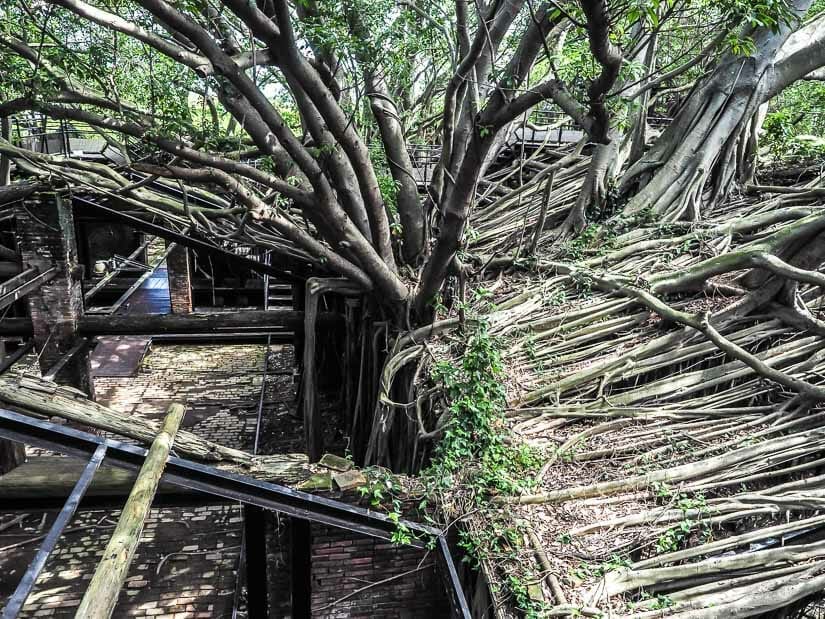
people talk about decolonization- the process of removing colonial practices and mindsets from our societies and ourselves- but where’s the vocabulary for what to do next? it is not enough to solely decolonize. under no circumstances can we simply remove the foundation of a structure and expect that structure to continue standing on its own. it needs a different support system. it needs those banyan trees.
this is what is called indigenization, and it needs to be named. indigenization means clearing out the ableist, white supremacist, capitalist ways of thinking and being by allowing our natural connections, nourished by gratitude and love, to thrive. it is not easy to unlearn what we have been practicing for centuries, but considering that indigeneity thrived across the earth peacefully for many more centuries than coloniality has, there is no reason that it wouldn’t be possible.
this is my substack on how to do just that.